Media campaigns
23/9/2026
Learn why some LinkedIn Ads really work: angles, offers, evidence, targeting, and execution. Concrete examples and method.

.svg)

There are two types of ads on LinkedIn. Those that pass by without leaving a trace. A clean visual, a generic promise, a “find out more” that does not engage anyone. We scroll, and we have already forgotten. And then there are the ones that stick. Not because they shout louder, but because they just touch: a recognized problem, a clear idea, a concrete detail. In a matter of seconds, something happens: “That's exactly what I'm talking about.”
Performance, on LinkedIn, is not just a magic trick. It is due to a rare alignment that is very simple to state: A sharp angle, an offer that has value, A reassuring proof. The rest, format, targeting, design, amplifies or slows down, but never replaces this base.
The word “performance” is misleading because it blends very different realities. On LinkedIn, an ad can be “good” on three levels:
It's the first step. The message is clear enough and relevant enough to merit micro-attention. Without this threshold, everything else is theoretical.
The click is not just curiosity. The person clicks because they think: “It can help me in my context.”
This is a major nuance: curiosity creates volume, intention creates value.
A useful conversion is not a completed form. It is:
The most common pitfall is optimizing as if only the first step mattered. A very “catchy” angle can produce a lot of clicks and very little business. Conversely, advertising that is less spectacular on the surface may generate few leads, but significantly better leads. The question that guides good ads is not: “Does that click?” It is: “Is this progressing?”
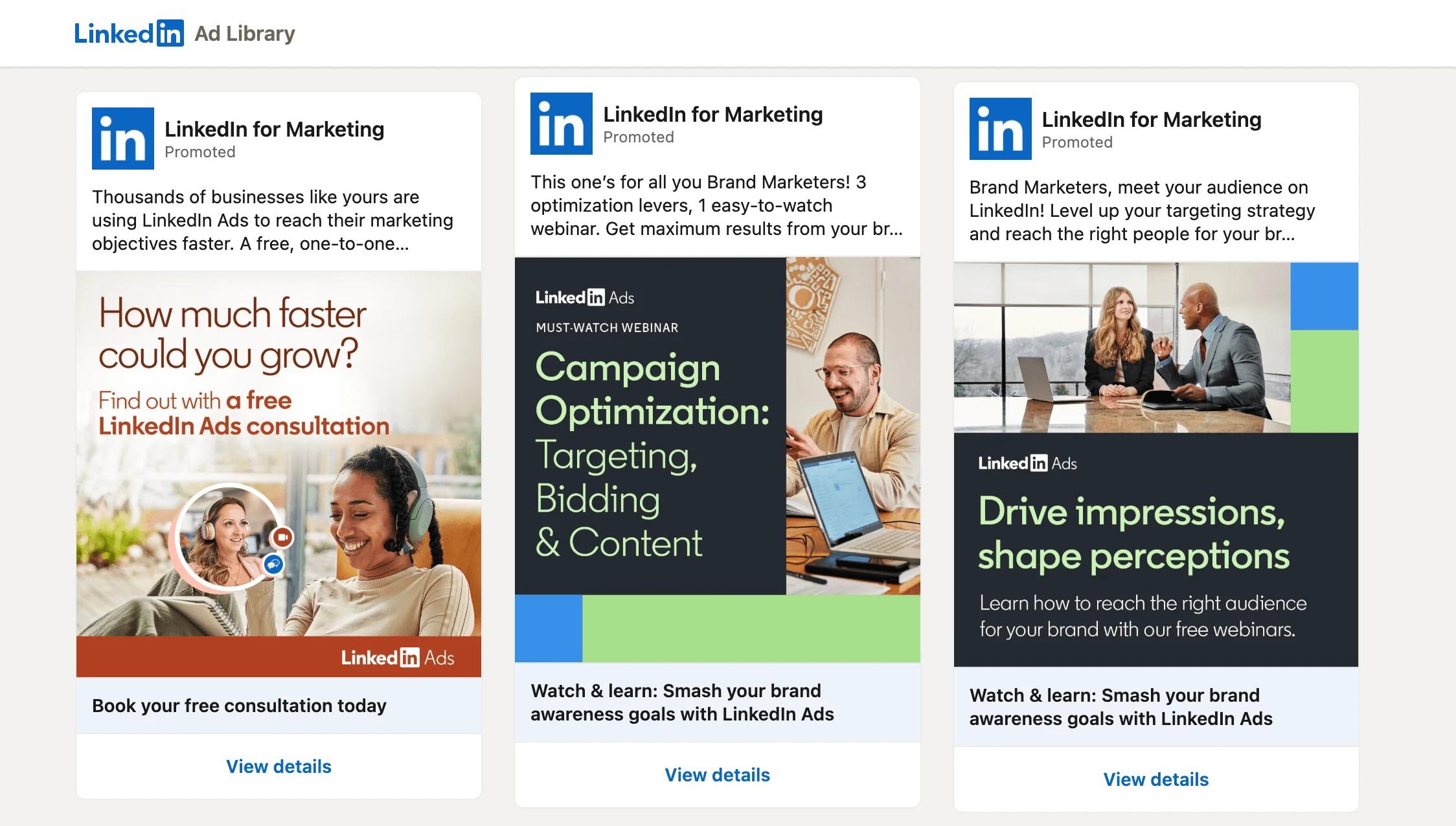
A successful LinkedIn ad rarely sounds like a slogan. It's more like a firm handshake: it asks a topic, suggests something concrete, and shows why it's reasonable to believe in it.
The angle is the entrance. The point of view. What the person understands in seconds: “It's for me, and it touches on a real subject.” On LinkedIn, an angle is strong when it causes any of these effects:
The angles that work in B2B are often “located”. They anchor the subject in a concrete reality: long cycle, multiple decision-makers, high basket, management expectations, pipeline pressure. Here are families of angles that are frequently effective:
The hidden costThere is no shortage of leads. We lack leads who make it to the appointment.
The false remedy
Add some Budget for Linkedin ads don't fix a poorly framed funnel.
The benchmark
Across a set of campaigns, the same mistakes come back, and they're expensive.
The real constraint
When the cycle is long, generic “best practices” stop working.
The playbook
A short, actionable, structured method, with which to apply it.
What weakens an angle is the non-serious vocabulary: “optimize”, “boost”, “accelerate”. These words can make a lot of noise. They rarely create useful conversations. On LinkedIn, precision has a decisive advantage: it filters naturally.
On LinkedIn, a lot of ads ask too soon. “Book a demo”, “discuss”, “take 30 minutes”... these are heavy requests, especially when the audience is not actively looking for them. A successful offer has a simple property: the value is readable before clicking. Deals that convert well often look like:
A practical formula makes it possible to avoid unclear offers:
[Deliverable] + [benefit] + [target] + [target] + [format/deadline]
Examples:
A vague offer forces one to imagine. However, on LinkedIn, as soon as the audience has to imagine... they scroll.
The proof is the most overlooked part, and often the most profitable. Because LinkedIn is saturated with promises, evidence acts as an immediate filter: it distinguishes a credible announcement from a speech. The most effective evidence is often very simple:
And when there are no “big results” to highlight, the proof can come in other ways: through an extract, a clear method, rigorous reasoning, transparency on what is measured and what is not. Proof is not a trophy. It is a safeguard.
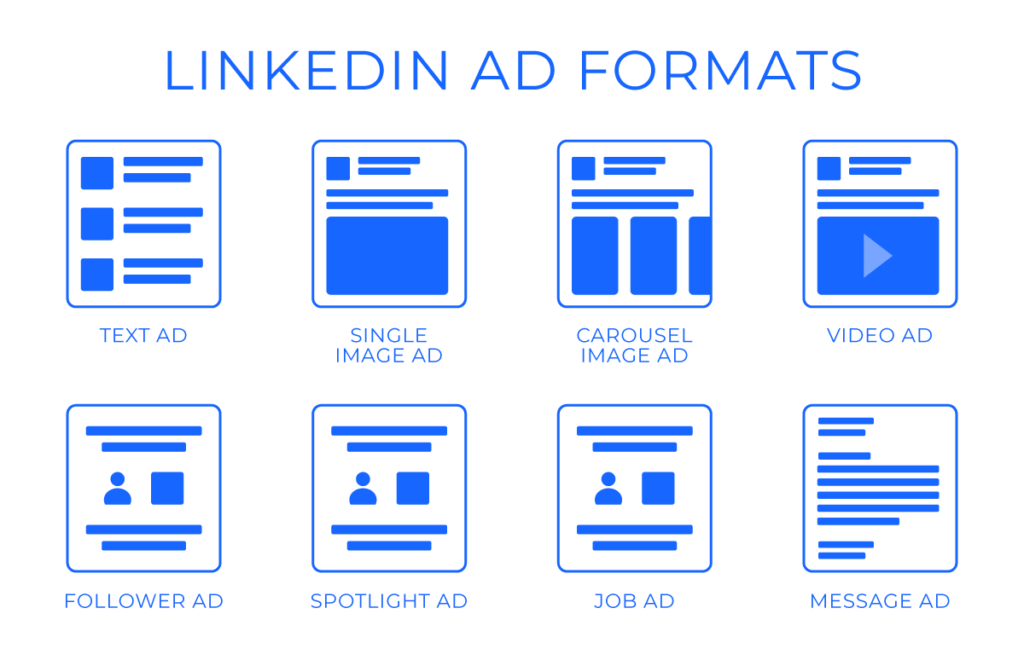
The Linkedin Ads format does not win in place of the message. But it can make the conversion natural.
It's a great format when the offer is a playbook, a checklist, a benchmark. The benefit is obvious: the audience consumes value immediately, with minimal friction.
Friction is low, so volumes can rise quickly. But that is precisely why the offer must be solid: otherwise, the leads are easy, but empty.
When the content is really good (assertive point of view, learning, story), sponsoring builds trust. The audience isn't just responding to a brand: it's responding to a voice.
This format can work very well on ultra-precise targets, with a really useful angle and proposal. Otherwise, it is perceived as an automated solicitation.
It is possible to analyze an advertisement without exposing a customer, a budget, or sensitive figures. It even requires looking at the right items.
1) A promise that is immediately understandable
No need to reread. The target, subject, and interest are obvious.
2) A “packaged” offer
The deliverable is clear. The value is visible. The effort required is reasonable.
3) An embedded proof
Contextualized figure, extract, mini-case: credibility is already in advertising.
1) A generic angle
It may seem “safe,” but it doesn't hook anyone.
2) A vague or overly engaging offer
Requesting a demo without providing value first is often too early.
3) A breakup after the click
Advertising promises one thing, landing says something else. Trust is broken.
On the blurred captures : blur names, logos, budgets, identifiers. Keep the structural elements (hook, bullet, CTA, extract) to transmit the mechanism.
48 hours are not used to “reinvent an account”. They are used to recover the signal, quickly.
If there is hesitation in reading, the audience feels it too.
Six real variations, not six synonyms.
Two “cost/loss” angles, two “benchmark” angles, two “method” angles.
One or two audiences, two offers maximum, own tracking. Readability comes first.
It's not about keeping “what clicks”, but what attracts the right profiles and generates useful signals (consistent leads, messages, specific requests).
In 48 hours, the reasonable objective is not to fill a pipeline. The objective is to get out of a hazy area.
A good reboot generally allows you to obtain:
A healthy campaign, at the start, often looks like this: less dispersion, more consistency, and a clear basis for Optimize the Linkedin campaign.
1) Hidden cost
Angle: the problem is not the volume of leads, but the next step.
Offer: audit grid (1 page).
Proof: extract visible in the creation.
2) False remedy
Angle: more budget does not correct a structure.
Offer: checklist “before increasing the budget”.
Proof: mini case before and after.
3) Benchmark
Angle: the same mistakes happen again on X campaigns.
Offer: mini-report (7 minutes).
Proof: slide “the 3 mistakes”.
4) Playbook
Angle: 6 Ads angles when the cycle is long.
Offer: document + checklist.
Proof: two-page overview.
5) Demonstration
Angle: a good LinkedIn ad reads like a message.
Offer: 10 attachment structures.
Proof: two structures displayed.
6) Taking a position (thought leader)
Angle: easy leads are expensive next.
Offer: filtering checklist.
Proof: mini-case in 5 lines.

3 Boulevard de Sebastopol, 75001, Paris
©Copyright 2024. All rights reserved.

If you want to keep in touch, and get a summary of Growth Marketing every week, it's just happening here 👇