Media campaigns
9/11/2026
Existing demand, budget, target audience, and tracking: the framework for choosing between ChatGPT Ads and Google Ads, including a 6-to-8-week test plan.
In 30 minutes, we'll tell you where to start based on your goals.


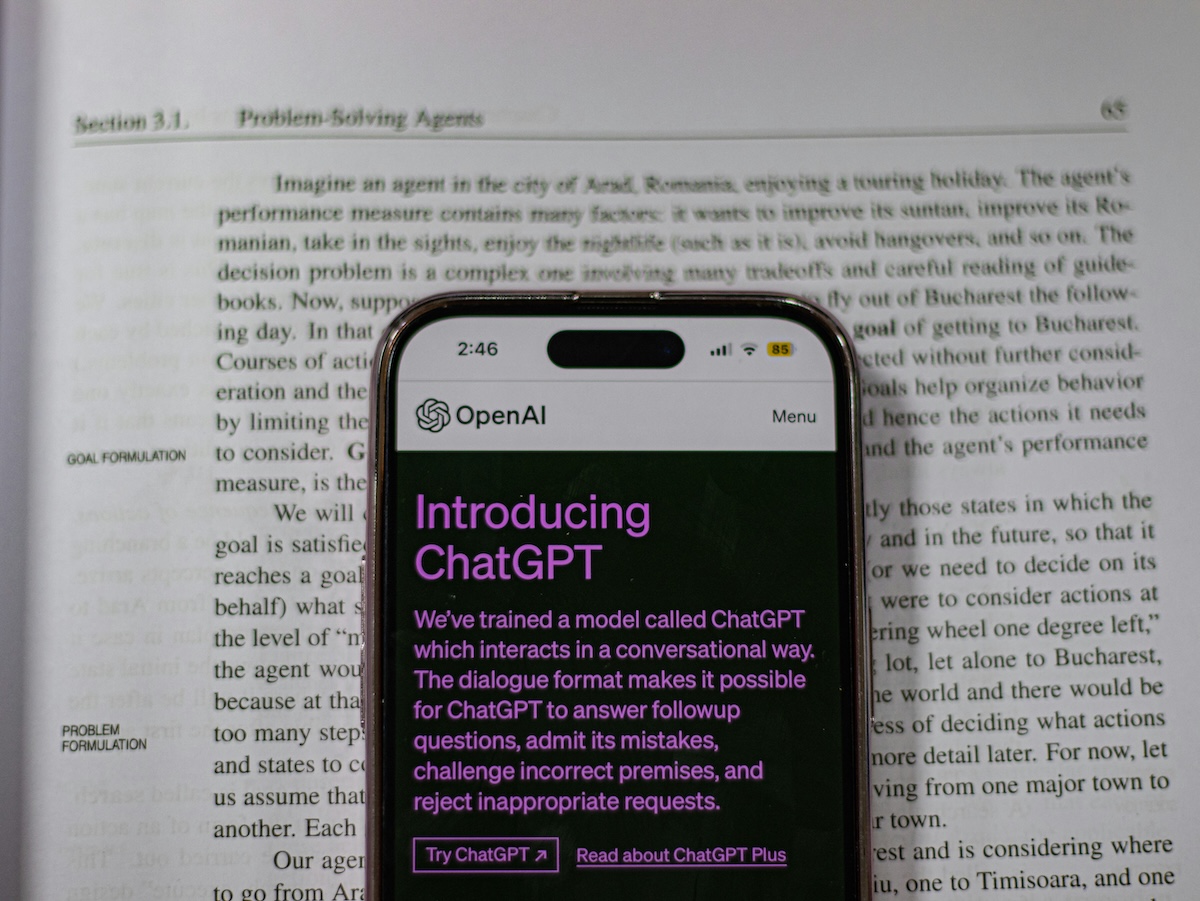
Since the launch of ChatGPT Ads in France at the end of August 2026, several clients have asked us whether they should reallocate part of their Google Ads budget to test advertising on ChatGPT. We have been managing Google Ads for years and are also running our clients' first ChatGPT Ads campaigns within our Google Ads agency and our ChatGPT Ads agency. To answer this, we always look at the same factors: what the company's customers are searching for on Google, their usage of ChatGPT, the available budget, and conversion tracking. Here is the framework we use.
On Google, the ad responds to a search intent expressed in a few words. In ChatGPT, the user often describes their situation in detail before asking for advice. The advertiser does not buy keywords. Instead, they describe to the ad platform the conversational contexts where their offering is useful—what OpenAI calls context hints.
Look at the search volume for your main keywords and your current rankings. If hundreds of people are typing "SME payroll software" or "fish delivery Paris" every month and you don't appear in either ads or organic results, run a Google Ads test first. The customers are already there, and the platform effectively tracks what they do after the click.
Ads are only displayed to users of the Free and Go plansPlus, Pro, and Enterprise subscribers don't see any. In B2B, many decision-makers have a paid version, often provided by their employer. Your sales team usually knows if their prospects mention ChatGPT during meetings: just ask them.
OpenAI requires a minimum of €25 per day, or about €750 per month. At this level, ads will run, but each context receives too few conversions to be compared against others. We recommend a test budget budget of at least €2,500 per month for 6 to 8 weeks. If you can only fund a test at this level, choose the channel where demand is easiest to identify.
On Google Ads, conversions must be correctly reported in the account and in GA4. On ChatGPT Ads, the OpenAI pixel and the Conversions API must be installed before the first impression. In B2B, link the tracking to your CRM to track qualified leads, not just submitted forms.
To evaluate ChatGPT Ads, you need a figure to compare it against: a cost per lead or a ROAS stabilized on Google Ads or Meta. A cost per lead of €60 on ChatGPT Ads might be excellent for a software publisher but far too high for an e-commerce business with a low average order value.
We built these two examples based on the requests we receive most often.
The company sells an expense management tool. They have never run a Google Ads campaign, even though queries like "expense management software" have significant volume. Their prospects are CFOs and SME executives, some of whom compare tools within ChatGPT.
We would advise them to start with Google Ads. Three months of campaigns will provide a cost per lead measured in the CRM. ChatGPT Ads would come next, targeting contexts like "compare expense management software for an SME," evaluated against the same cost per qualified lead.
The brand has a profitable Google Ads account for its flagship products, but searches for its name and products are no longer increasing. Its customers are asking ChatGPT to help them build a skincare routine.
For this brand, ChatGPT Ads is the first new channel to test. The benchmark ROAS is known thanks to Google Ads, and ChatGPT allows them to reach people who haven't searched for the brand yet.
For Déménager Facile, a moving quote comparison platform, we launched a Google Ads account without any other concurrent channels. In two months:
We targeted 20 departments, created ad groups by city, and separated two audiences: the general public and military personnel relocating. Within a few weeks, the company had a benchmark cost per lead, the figure used to subsequently evaluate a new channel like ChatGPT Ads. Read the Déménager Facile case study
The calculation for the initial budget is detailed in our article on the budget to plan for Google Ads.
Our article ChatGPT Ads: building an initial test and deciding on the next steps details the method and the most common mistakes.
Compare the cost per qualified lead (in B2B) or the ROAS (in e-commerce) of the tested channel with that of your benchmark channel.
In B2B, make decisions based on CRM data. For Airties, we optimized campaigns for MQLs rather than lead volume, and the cost per MQL dropped to 9 times below the target by the third month.
On ChatGPT Ads, the competition is still low and bids remain inexpensive. Advertisers testing now are learning how to use the platform before it becomes crowded.
We start with your search volumes, your Google Ads results if you have any, your customers' usage of ChatGPT, and your conversion tracking. We then recommend which channel to test first and build the test with a quantified goal. The same team manages both your Google Ads and ChatGPT Ads support, allowing for a comparison of both channels using the same metrics.

3 Boulevard de Sebastopol, 75001, Paris
©Copyright 2024. All rights reserved.

If you want to keep in touch, and get a summary of Growth Marketing every week, it's just happening here 👇